
- charisrenzocathyware
-
 Sabtu, 19 Juli 2014
 -
 0 Comments


Get Free Ebook The Island of Knowledge: The Limits of Science and the Search for Meaning
Well, somebody could choose on their own exactly what they want to do and also have to do but occasionally, that kind of individual will certainly need some references. People with open minded will certainly constantly try to seek for the new points and also information from many sources. As a matter of fact, individuals with shut mind will certainly always assume that they can do it by their principals. So, what type of individual are you?
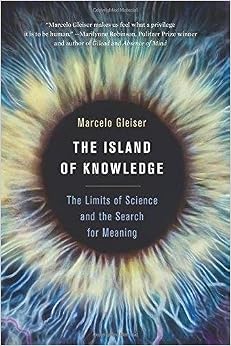
The Island of Knowledge: The Limits of Science and the Search for Meaning

Get Free Ebook The Island of Knowledge: The Limits of Science and the Search for Meaning
After sometimes, book turns into one of the good manners that will urge the system of life run much better. It involves not only the thoughts, motivation, point of view, however also the realities. Many realities have actually been revealed from the books. Lots of literature jobs are likewise offered. When you have even more time to review, please read this The Island Of Knowledge: The Limits Of Science And The Search For Meaning as one of the analysis products!
When initially opening this book to review, even in soft data system, you will see how the book is developed. From the cove we will likewise locate that the writer is truly great in making the viewers really feel brought in to read more and extra. Ending up one page will certainly lead you to check out next page, and even more. This is why The Island Of Knowledge: The Limits Of Science And The Search For Meaning has lots of followers. This is what the writer discusses to the readers and utters the significance
From the mix of expertise and activities, someone can enhance their ability and capability. It will lead them to live and also function far better. This is why, the pupils, workers, or even employers ought to have reading behavior for books. Any type of book The Island Of Knowledge: The Limits Of Science And The Search For Meaning will certainly provide specific understanding to take all perks. This is what this The Island Of Knowledge: The Limits Of Science And The Search For Meaning informs you. It will include more understanding of you to life and also work much better. The Island Of Knowledge: The Limits Of Science And The Search For Meaning, Try it and also prove it.
Make this book as favourite book to check out currently. There is no better book with the very same topic as this one. You could see how words that are created are truly suitable to urge your condition to earn much better. Now, you could also really feel that the things of The Island Of Knowledge: The Limits Of Science And The Search For Meaning are proffered not only for making good opportunities for the visitors yet likewise offer good ambience for the result of what to compose.
About the Author
Marcelo Gleiser is Appleton Professor of Natural Philosophy and Professor of Physics and Astronomy at Dartmouth College. He has published numerous popular works, including an essay, “Emergent Realities in the Cosmos,” which was featured in 2003's Best American Science Writing, and three previous books: The Dancing Universe, The Prophet and the Astronomer, and A Tear at the Edge of Creation.
Read more
Product details
Paperback: 368 pages
Publisher: Basic Books; 1 edition (October 27, 2015)
Language: English
ISBN-10: 0465049648
ISBN-13: 978-0465049646
Product Dimensions:
5.5 x 1 x 8.2 inches
Shipping Weight: 12.6 ounces (View shipping rates and policies)
Average Customer Review:
4.3 out of 5 stars
77 customer reviews
Amazon Best Sellers Rank:
#97,406 in Books (See Top 100 in Books)
This book is ostensibly about the inherent limits of scientific knowledge, but actually provides an excellent summary of what is known (at least in physics) and traces its development from the Greeks onward, in the process of identifying these limits. One limit arises from the cosmic horizon of 13.8 billion years, before which the universe was opaque to radiation, implying that we can never receive information about regions further away than 13.8 billion light-years. Uncertainity at the sub-microsopic scale is due to the quantum weirdness of knowing only the probability of a particles's location until it is measured, the inherent uncertainty of that measurement and the entanglement (action at a distance) between particles Early Western philosophers looked for a unified theory of the nature of matter. Thales (600 BCE) thought "all stuffs of the world were but different manifestations of a primal stuff, the embodiment of a reality always in flux". Parmenides, somewhat later, wrote "that what is can not change, for it then becomes what it is not". According to Lucretius (50 BCE), Leucippus and Democritus thought that all things were made of unchanging atoms moving in a void under various forces, assuming different shapes and forms under different forces by the reordering of numerous atoms. Aristotle posited a bottom-up natural arrangement of his four basic substances--earth, water, air and fire--to explain why a body moved up or down when displaced from its natural place. As the author notes, scientific inquiry is an ongoing process, implying an ever-changing perception of reality. Aristotle's version of physical reality dominated western thought until Galileo, Kepler and Newton in the 17th century turned to measurement of physical phenomena and the construction of natural laws to explain those measurements, thereby constructing a new version of physical reality which was embellished over the next two centuries, notably by Maxwell's introduction of the electromagnetic field. Then, early in the 20th century this classical version of physical reality was shattered by Einstein's replacement of Newton's force-at-a-distance concept of gravity by the warping of space, and the quantum theory of Heisenberg and Schrodinger raised issues of how to understand the fundamental laws that govern physical reality. The author provides an enlightening discussion of the many fascinating aspects of 20th century physics, from which he concludes that there may be inherent limits to what science (physics) can say about physical reality, and these limits are more than just limitations in technology. Many physicists, myself included, would stop short of this conclusion, noting the author's earlier statement that scientific inquiry is an ongoing process, implying an ever-changing perception of reality.
Providing an overall reflective survey of mankind's incremental probing and discernment of physical reality, this book is remarkably readable for motivated non-scientists. It is generally well composed, and the text and ideas both flow smoothly and plausibly. Moreover, this book engenders a sustained if not escalating sense of awe regarding the evolved state of knowledge of the physical sciences, together with an appreciation of the enormity of its enabling contributions.Regarding the book's title, the expanding island/shoreline metaphor is apt and well elaborated. Here the area of the island associates with the body of extant knowledge, and the shoreline with the accumulation of unanswered questions. From the shoreline, the waters loom as the unknown, and even some of the unknowable, against the horizon of the marginally knowable. Beyond the horizon lies the strictly unknowable, as proscribed via physical constraints. Notably, the island of knowledge is not composed solely of scientific knowledge, as the author admits other ways of knowing (which lie outside the scope of the book). Plato's Allegory of the Cave is also invoked to characterize human limitations in discerning reality. As an interesting twist, the cave wall, onto which human access to reality is projected, affords enhanced perceptual resolution concomitant with the increase in extant knowledge.The book is divided into three complementary parts: the cosmos, matter, and cognitive faculties. I found the first two parts to be excellent and most insightful, but the third part seemed rather weak and not well integrated into the foregoing parts. Seemingly, the book's treatment of cognitive faculties is directed at limitations regarding human prospects for dealing with the potentially knowable. Here, binding limitations associate with intellectual tools like mathematics, and constraints like those imposed by Godel's Proof. Thus, some cognitive limitations apply to scientific inquiry in general. Aside from these absolute limitations, each individual investigator has personal perceptual horizons that tend to occlude or distort the apprehension of what precisely is known, what is potentially knowable, and what questions are in consequence entailed or answerable. Apart from inherent limitations on what is knowable per considerations of physics then, there are cognitive limitations of either an essential nature or an incidental one.Furthermore, these three parts of the book do not reflect a "shifting scientific worldview" (p. xiv), at least in my construal; rather, these foci have been more or less contemporaneous since antiquity. Instead, the distinguishing shifts largely associate with the progression of four understandings of the phenomenon of gravity: Aristotelian, Newtonian, Einsteinian, and that of quantum gravity. This progression is quite well developed in the first two parts of the book. Moreover, this progression now yields to the prospect of a pending "new physics (that) needs to explain how...the physics of the very large meets the physics of the very small. This is the realm of `quantum gravity', the marriage of the general theory of relativity with quantum physics" (p. 72).What especially held my interest in the first two parts was the well integrated and highly readable exposition of the key controversies and discoveries in the physical sciences. The text read well and the ideas flowed smoothly. This coverage was augmented by relevant notes on shifting worldviews, contributions/speculations of principal figures, and the author's remarks/insights. Regarding worldview transitions, the current protracted puzzlement and dissensus with respect to the interpretation and full assimilation of quantum theory receive insightful treatment, albeit one necessarily with a less than satisfying closure. Basically, the radical yet demonstrated aspects of quantum physics of action-at-a-distance and quantum interference are deeply disquieting and obdurately problematic for many in the physical sciences research community. This demonstration is nicely described in Chapter 26, wherein the author undertakes to "discuss Bell's theorem and how its experimental implementation shows that reality is stranger than fiction." Here, the `extraordinary' prevails in several experimental cases, which show the violation of Bell's inequality in consonance with the quantum predictions.Accordingly, a still emerging worldview will somehow have to rationalize and accept "how nature behaves at the shortest distances", i.e., action nonlocality and measurement nondeterminism. In consequence, there is now major research emphasis on the foundations of quantum physics, as in the phenomena of pair entanglement and superluminal interactions. Meanwhile, derivative technologies like semiconductor devices and quantum computing are nonetheless exploiting quantum effects, if only on an as yet exploratory basis.Among the interesting sidelights regarding the actual research pursuits of quite a few historically prominent figures are their somewhat prevalent investigations into alchemy or the occult. Newton, for example, was considerably involved in alchemy, and J. J. Thompson in occult endeavors. Alchemy, moreover, is seen as sort of a precursor to modern science, although it eventually discarded such subject matters. With the demonstration of quantum weirdness or the `extraordinary', however, it would seem that such discarding may not be altogether warranted, at least rhetorically.As a non-specialist in its subject areas, I nonetheless really enjoyed this book. Its content was very illuminating, largely in that it clearly explained and integrated matters with which I had been somewhat familiar but inadequately informed. Despite certain of my reservations, like one cited above, I believe this book to be a solid Five-Star selection. Further, Professor Gleiser's writing would suggest that he is an agile, spellbinding, and compelling lecturer.
The author gives us an honest view of why our knowledge is limited and will remain so. He feels us that our search for understanding will expand our view of reality, but we cannot pitch our tent on the conquered territory because we are nomads in perennial search of new lands.I liked this book because it tells a credible story of what is possible for us. Understanding our limitations is the first step to understanding our possibilities.Marcelo Gleiser is a trustworthy guide to travel in uncharted lands.
A very accessible "state of the union"(or disunion) in Physics. Like many my math skills are embarrassingly weak but I do enjoy a good physics read. This book doesn't hit you with a ton of formulas, the analogies used to describe things such as Quantum Mechanics, Superposition, Entanglements, &c. were very well done making these oftentimes difficult to understand concepts understandable. If you are looking for a page turner that attempts to bring you up to speed with the current effort to unify the laws of the very large and the very small you will be pleased with this book. Anyone reading at a high school level will find this book easy to understand and fascinating.
The Island of Knowledge: The Limits of Science and the Search for Meaning PDF
The Island of Knowledge: The Limits of Science and the Search for Meaning EPub
The Island of Knowledge: The Limits of Science and the Search for Meaning Doc
The Island of Knowledge: The Limits of Science and the Search for Meaning iBooks
The Island of Knowledge: The Limits of Science and the Search for Meaning rtf
The Island of Knowledge: The Limits of Science and the Search for Meaning Mobipocket
The Island of Knowledge: The Limits of Science and the Search for Meaning Kindle


0 komentar: